
Common Life

 Inspired by the Example of the Early Church
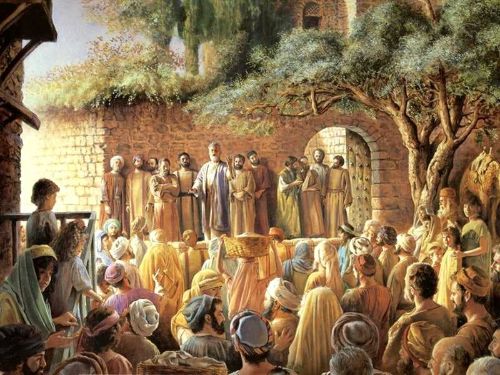
As canons and canonesses, our common life is modeled after the example of the early Church gathered around the Apostles, which the Lord Himself initiated in the company of the Apostles and the other disciples. (cf. Acts 1: 13-14, 2: 42-47, 4: 31-35, 6: 2-4; Mk 3: 14ff; Jn. 12: 6; Lk 9: 1-6, 10: 1-16). We strive to fully live the “apostolic life” – the “vita apostolica” - to be a community of one mind and one heart (Acts 4: 32) with a oneness of love born and nurtured through the same consecration, spirit, prayer, shared life, and mission. With the Spirit’s guidance, out of many members the common life forges one religious family gathered in the name of the Lord. Our life becomes a mutual support in fulfilling the vocation of each member. Fraternity rooted in love makes easier the path to sanctity.
Reflection of the Unity of the Trinity
Our community is a religious family made one in the unity of the Father, the Son, and the Holy Spirit. Our communion as brothers and sisters, founded on and rooted in charity, is meant to be an example to the world of universal reconciliation in Christ. For this reason, we strive to reflect the perfect communion which exists among the Divine Persons by showing unity in plurality and plurality in unity, with charity as its source and goal.
Building Community Together
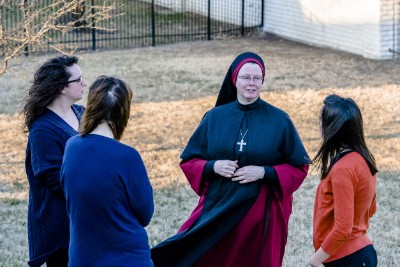 Our common life is a life shared in love, of which the Trinity is the source. This love of God is the foundation upon which true fraternal life is based. In striving to imitate Christ’s example of self-giving, we strive to love each member of this religious family with the love of Christ.
We all count on the spiritual strength and moral support of every other Servant, whether in the daily activities of community living or in the common apostolate. We manifest our love and concern for each other through our prayers, through expressions of warmth and kindness, by showing respect, through anticipating each other’s needs, through open honest communication, through the sharing of ourselves, and through forgiveness after misunderstandings. By the grace of God, we are enabled to fulfill Jesus’ words: By this will all know that you are my disciples, by your love for one another (Jn 13:35).
Prayer: Source and Vitality of Community Life
Our communion originates in and grows from an intimate communion with God. This communion thrives particularly through the frequent reading, hearing, and sharing of the Word of God and celebrating the liturgy, particularly the Eucharist, the sacrament of Reconciliation, and the Liturgy of the Hours.
Love and concern for each other is first of all manifested in our prayer. Prompted by understanding and mutual love and concern, we seek to foster and safeguard the vocation of every Servant by including them frequently in prayer, by offering sacrifices on their behalf, and by our own example of fidelity to the Lord.
Open Communication
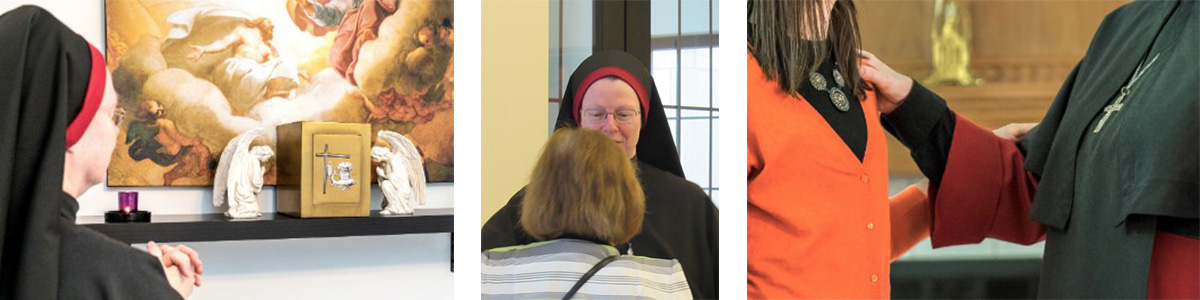
Community prospers through frank and open communication with each other. This requires a willingness to really listen to one another, to be open in our dealings, and to be ready to set aside individual preferences. The path to authentic communication lies in frequent interpersonal and communitarian dialogue, marked by an acceptance of each other, a joyful sharing of spiritual and temporal goods, and the service of charity that comes from the heart.
Communication
We strive for a spirit of openness and honest communication. This is an expression of the Augustinian spirit which draws all of its members into the charity of a single mind and heart.
Forgiveness
All Servants are to strive to build a community of brothers and sisters in Christ, in which God is sought and loved before all things. Charity and humble service should be the testament of our conversion. “For we know that we have passed from death to life, because we love the brethren” (1 Jn. 3: 14). Humble love for and forgiveness of one another is our best preparation to receive the gift of Christ’s Body and Blood in Holy Communion. “If you brother has a grievance against you... (Mt 25:3) Growing in love and union with the Trinity will bring peace to our community as his life more brightly radiates through us. (cf. Mt. 5: 23-24)
 Daily Chapter
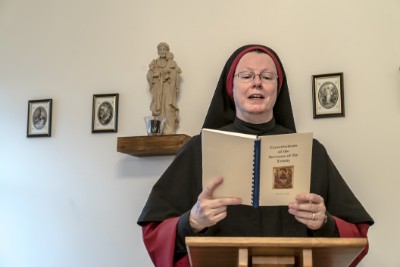
One means of communication aimed at strengthening community is the chapter. The daily chapter is a gathering of all the members of a particular canonry. During the chapter a section of the Rule of St. Augustine and/or the Constitution or Customary of the Servants of the Trinity are read. The superior will often offer a short reflection on it. Also, the martyrology, or a short biography of a saint whose memorial occurs the next day, is read. This is also a time when the superior may share information with the community members and ask for input, and may assign other tasks that may be necessary for the life and the apostolate of the community.
Elements of the Common Life
Common Life
Recognizing our union in Christ, we embrace the obligations of the common life freely and joyfully.
-
-
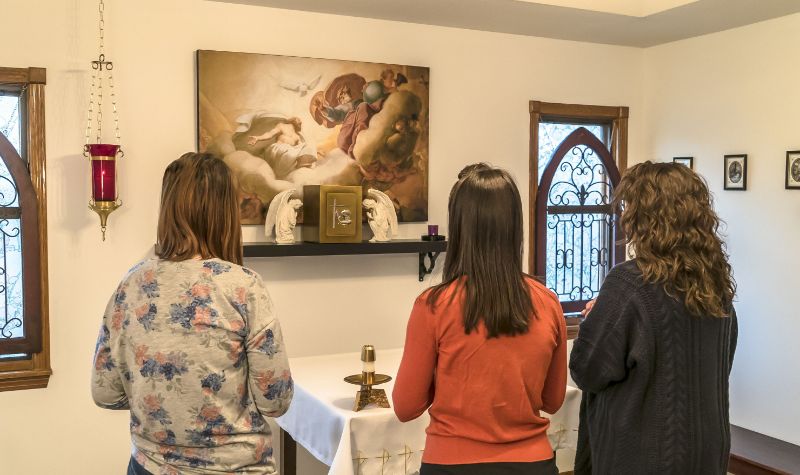
We join together in prayer at the appointed times.
-
-
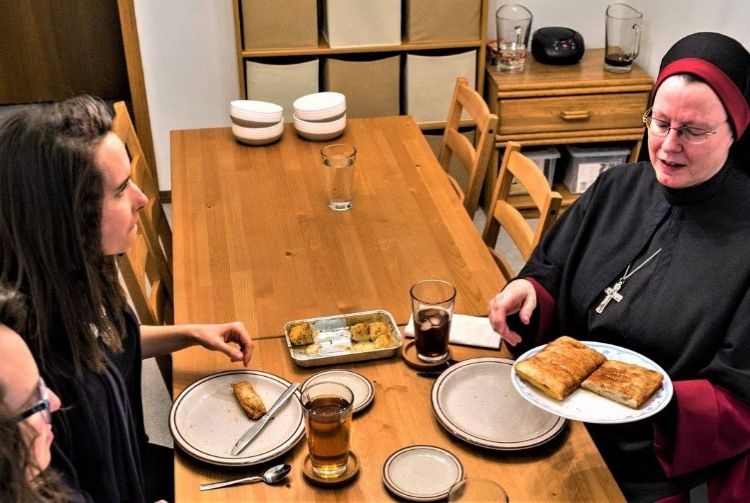
We contribute to the community spirit by recognizing meals as occasions for community sharing,
-
-
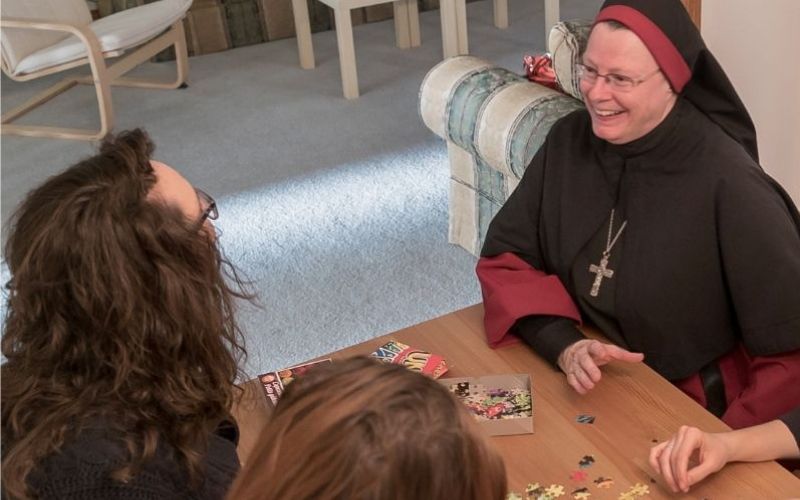
by joining in times of recreation,
-

-
by participating in chapters and other community gatherings,
-
-
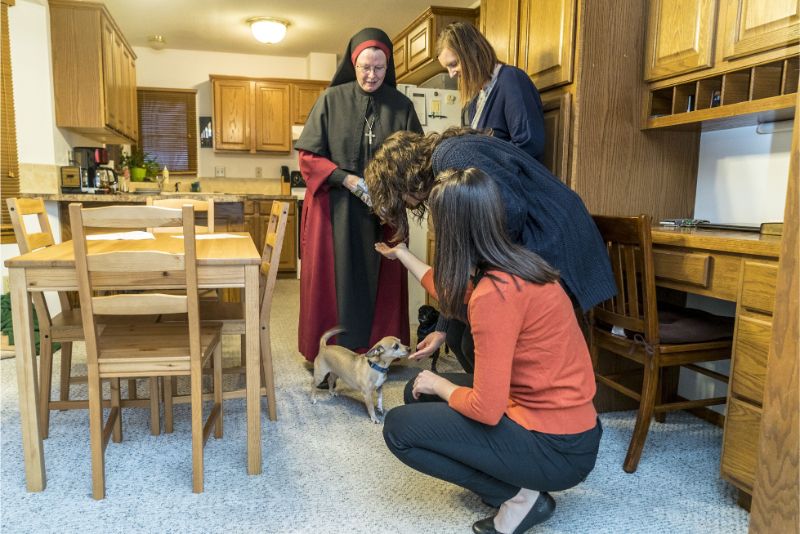
in celebrating feasts and holidays together,
-

-
by volunteering our aid for the local and general needs of the Order, and by respecting the needs of our fellow Servants for an atmosphere conducive to recollection, all of which strengthen our common life and bear witness to its reality.
 Common House
In keeping with the demands of common life, we live in a priory under the authority of a superior. Each house has a chapel in which the Eucharist is celebrated and reserved as the very center and strength of the community life. Each branch of the Order lives an autonomous common life but we join together to celebrate of the sacred liturgy and collaborate in the works of the liturgical apostolate.
Silence
A measure of silence and solitude is vital to us as we strive to develop an abiding awareness of intimate union with and in the Trinity. Only in an atmosphere of quietude can the life of prayer flourish. Religious silence is not a mere absence of words. It is a fruitful receptivity of God’s Word uttered in our heart.

Common Goods
Prompted by our oneness in Christ and after the example of the early apostolic Church, we hold all our temporal goods in common. “None of them ever claimed anything as his own; rather, everything was held in common” (Acts 4:32). Besides sharing of material resources, each of us contributes to the good of the Order though our unique gifts of nature and grace.
The charity on which the common life is built does not seek its own (cf. 1 Cor. 13). It means preferring the common good over our own individual interests, not our personal interests over the interests of the community. At the same time, the community is responsible to care for the needs of the individual and there are true differences among members. What the community offers is given according to the need of the individual. However, the manner of life of each individual must be shaped by responsibility for the community.
Common Witness
We wear the habit of our Order as a sign of our consecration and of our fraternity. It is an effective witness of our unity, both to ourselves as individual members and to others. As determined by custom, in order to respect and preserve our formal habit, when engaged in tasks requiring a measure of physical exertion in or around the house, and when it seems more appropriate for travel, we may wear the “house habit,” and for truly messy or dirty jobs “work clothes” may be worn.
Common Work
Communal responsibility finds a place in communal work. We look after not only our own area of responsibility but, with respect for the duties of others, we have an interest in and share responsibility for the whole of the community. We help each other whenever we can, whether it is a task around the priory or one related to our apostolate of promoting the sacred liturgy.