Steps in Formation

Formation in Religious Life is a Gradual Process over a Lifetime
Religious formation is a gradual process and has various stages. A person passes through each stage, accomplished over a certain period of time, according to one’s development and the continuing process of discernment.
The entire formation of the Servants of the Trinity embraces two major periods:
The first is called initial formation. This is the period of formation leading up to solemn profession. Initial formation has two phases: 1) the novitiate, with its pre-novitiate period and 2) the post-novitiate phase which lasts until solemn profession.
The second major period is called the period of ongoing formation. This is the period following solemn profession and which lasts a lifetime.
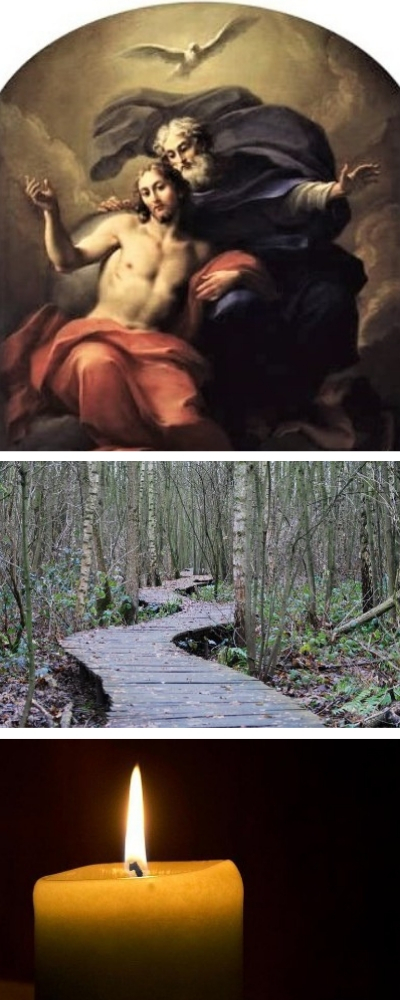
All the stages together make up our journey to God. Don’t think of the time spent in discerning whether to enter religious life as the only journey; our whole life is a journey leading us into the Trinity and to eternal life. That’s why formation is ongoing. There are steps and stages along the way, but each step is part of a larger whole.
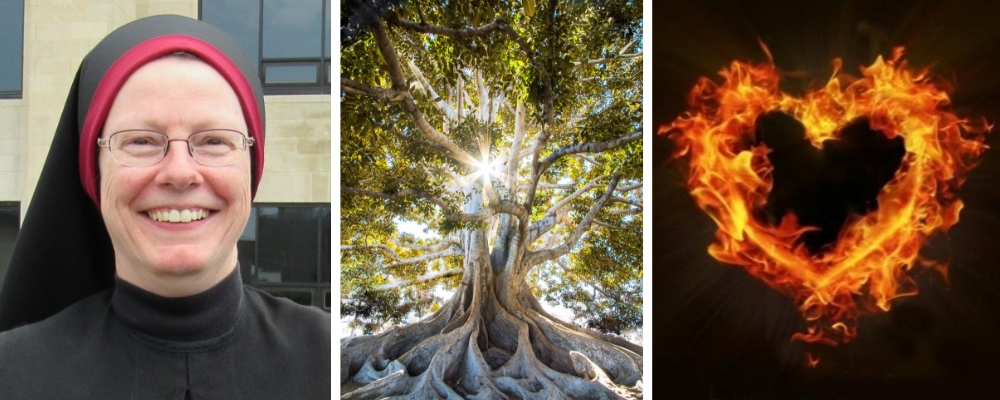
 Passing through various stages in the process of formation helps nurture the seed of our vocation, that calling which God has planted with such care in our soul. Formation is meant to fan the flame of our heart to make it burn brightly for God and to help transform us from an individual alone into a community of love on fire with God himself.
POSTULATE
When a person applies to enter the Servants of the Trinity and is accepted, they enter the first stage, called the postulancy. The word postulant literally means “one who asks.” Postulants continue to ask questions of themselves and of the community, and vice versa. The postulant and the community continue discernment together, but now in a different context.

 Purpose of the Postulancy
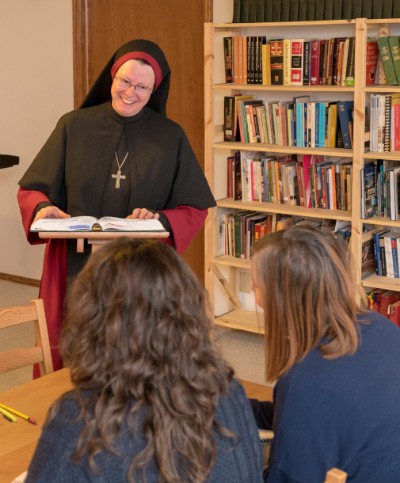
The purpose of the postulancy is to provide a gradual adjustment from the way of life the postulant knew before to a new way of life. It aims to develop the good will and intentions of the postulant. It enables a postulant to learn how to give greater glory to God and to manifest a spirit of communion. This is when the seed of a vocation to the religious life begins to sprout. The postulancy is an indispensable preparation for the novitiate where religious life begins.
The postulancy is intended to help the postulant ponder their vocation more deeply and to progress spiritually, communally, and intellectually. It gives the postulant the opportunity to be sufficiently satisfied about the correctness of their choice to pursue a religious vocation and it also allows the community to make a further tentative evaluation about the postulant’s vocation and readiness.
Focus of Formation during the Postulancy
Setting out on the journey of religious life means learning how to deepen one’s prayer life. Since grace builds on nature, it means cultivating virtue, for example, goodness of heart, sincerity, gratitude, strength and constancy of mind, courtesy, compassion, generosity, and service. It means developing communication skills which are so important when living within community. The postulant has the opportunity to learn a little about the charism of the Order and its liturgical apostolate. Postulants increase their knowledge of religious subjects through the study of Sacred Scripture, Catholic doctrine and spirituality, liturgy, and other courses.
 Through the experience of community, postulants learn to imitate the life of the Trinity by offering themselves, their gifts and potential, in union with Christ our High Priest, to God, to the Church, and to the Order.
Length of Postulancy
The postulancy ordinarily lasts nine months. For a good reason, in view of the postulant’s readiness, the community may shorten or lengthened this period a little. At the appropriate time, a postulant who freely decides to continue formation in the Servants of the Trinity submits a request to be admitted to the novitiate.
NOVITIATE
 Entrance into the Novitiate
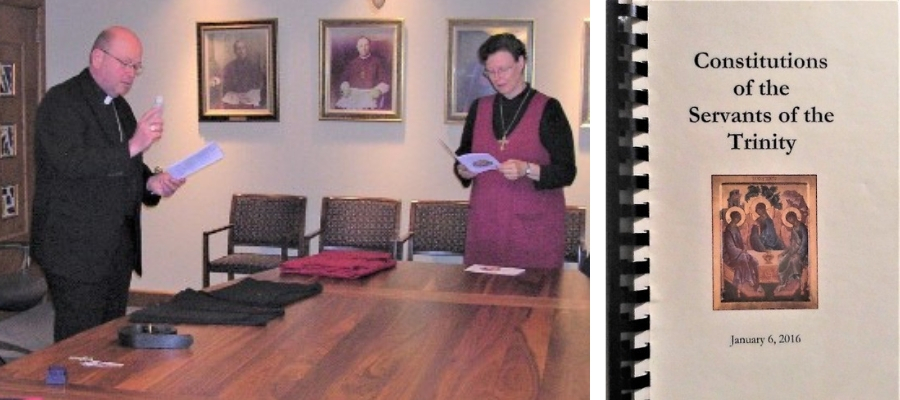
In a simple ceremony within the community a postulant is received into the novitiate. The postulant receives the habit of the Order and is given a new religious name and a copy of the Constitutions. These outward signs indicate the novice’s commitment to learn and grow in the faithful observance of the way of life of the Canons and Canonesses of the Servants of the Trinity.
Purpose of Novitiate
The novitiate, by which religious life in the Order begins, is a period in which novices better recognize their divine vocation, and one that finds a place in the Servants of the Trinity in particular. Discernment by the novice and by the community continues; both test the novice’s intention and suitability for life in this Order.
The novitiate reveals to the novice to the demands and blessings of religious life as lived in the Servants of the Trinity. It allows the novice to live concretely a God-oriented life and to practice the evangelical counsels of chastity, poverty, and obedience before assuming the obligations of the vows at first profession.
 Focus of Formation during the Novitiate
The growth begun during the postulancy continues in the novitiate. During the novitiate the novice experiences the Order’s manner of living more deeply and is further instructed in the charism and mission of the Servants of the Trinity in order to be more deeply formed in mind and heart by its spirit. Through daily experience the novice learns how to live and harmoniously integrate the spiritual, communitarian, intellectual, and apostolic aspects that make up the life of a professed religious.
Some of the particular areas of growth pursued during the novitiate are a deepening sensitivity to the presence of God, especially in prayer, a reverence and respect for proper authority, a genuine willingness to live the religious life and the charism of the Order, a willingness to test oneself according to the Gospel and through frank dialogue with the community, and a true effort to engage in a genuinely communitarian life with others.
 Length of Novitiate Period
The novitiate of the Servants of the Trinity is eighteen months in length. If there is a need, it may be lengthened a few months. The first twelve months make up what’s called the canonical year, a special time required by the Church for all religious. Religious formation is the focus of the canonical year and studies include just those subjects serving religious formation. Academic studies only resume at the conclusion of the canonical year of novitiate.
FIRST VOWS AND THE JUNIORATE

 Entrance into the Juniorate
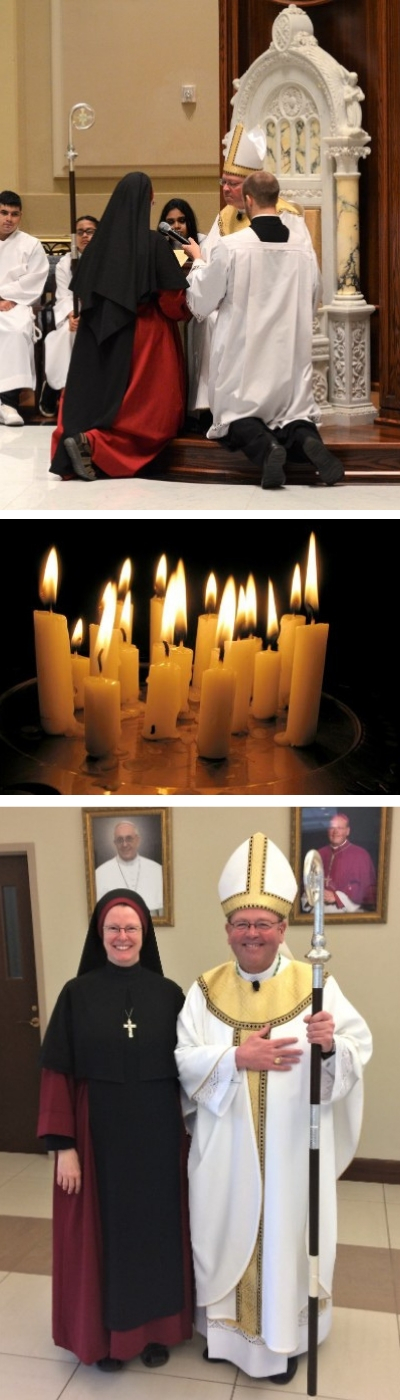
At the conclusion of the novitiate, a novice who is ready and freely requests it, is allowed to make first profession for a period of one year. The profession of temporary vows takes place within the celebration of the Holy Sacrifice of the Mass.
Purpose of the Juniorate
The juniorate period constitutes a preparation period for solemn profession. Now bound to the Order, the religious publicly vows to live the evangelical counsels and the life proper to the Servants of the Trinity. The formation begun in the postulate and novitiate continues through study and practice, but now as a professed Servant. The aim of the juniorate period is to provide an integrated program of continuing religious, apostolic, doctrinal, and personal formation. Servants are able to further test their ability to integrate the spiritual, communal and apostolic dimensions of life as a Servant of the Trinity, to evaluate their capacity to grow in holiness and service, and to assess their readiness for total consecration to the Most Holy Trinity through the profession of solemn vows.
Focus of Juniorate Formation
The period of temporary vows focuses on deepening a Servant’s love for the Trinity, union with Christ our High Priest and imitation of Mary, Handmaid of the Lord, on strengthening their fidelity to the Order, their ability to live and love in community, and on facilitating the progressive education necessary for their participation in the liturgical apostolate of the community.
As junior professed Servants are sufficiently prepared, they will receive an apostolic assignment. This step provides the opportunity to share more fully in the life and work of the Order. All the facets of the juniorate provide the framework necessary for the mature deliberation a Servant must make before solemn profession.
Length of the Juniorate Period
The period of temporary profession lasts a total of four years. Between first profession and solemn profession, a Servant renews temporary vows once for one year and once for two years. At each step along the way, the religious who freely desires it, requests admission to the renewal of temporary vows, and finally to the profession of solemn vows.
SOLEMN PROFESSION
 Admission to Solemn Profession
The profession of solemn vows takes place within the celebration of the Holy Sacrifice of the Mass and at the Cathedral church of the diocese, when possible.
Definitive Membership
By solemn profession, a Servant is definitively incorporated into the Servants of the Trinity and becomes a full member of the Order. Solemn profession seals an intimate union with the Most Holy Trinity whereby a Servant belongs totally to him for life. It commits the Servant to the way of life proper to the Order as a canon or canoness of the Servants of the Trinity from that day forward. Further, this consecration immerses a Servant more radically in the life and mission of the Church for the honor of God and the salvation of souls.
ONGOING FORMATION
 Our formation as Servants of the Trinity does not end with the completion of a program of studies or with the profession of solemn vows. For the vitality of each member, and of the Order as a whole, formation must be an ongoing process covering every stage of religious life, from initial formation to the period when the Servant prepares to meet the Lord in death.
Through ongoing formation, we continue to deepen our relationship with the Trinity, to more fully embody the spirit and charism of the Order in our lives, to develop our personal gifts and talents, to more deeply root ourselves in our communitarian life, and to more fruitfully engage in the liturgical apostolate of the Order. With the help of God, all the stages of formation and all the ups and downs of the journey, help us become fire in the midst of the Fire, who is God, so that we may fulfill our call to set the world on fire by bearing abundant fruit.